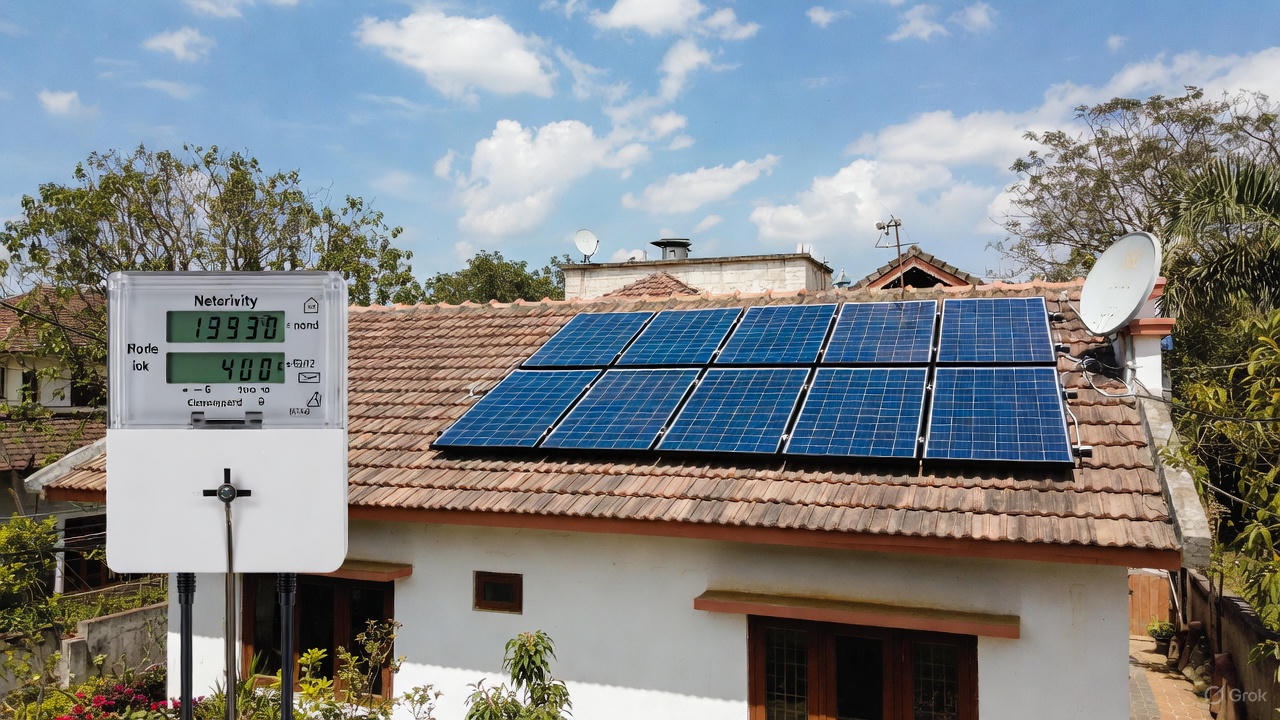
Solar net metering is one of the most important components of rooftop solar systems in Karnataka. Without net metering, homeowners cannot fully benefit from solar power or government subsidy schemes.
If you are planning to install rooftop solar or already have solar panels installed, understanding Karnataka solar net metering rules is essential to reduce your electricity bills and ensure smooth approval from your DISCOM.
This guide explains what solar net metering is, how it works in Karnataka, the approval process, billing mechanism, benefits, and common issues, in simple language for homeowners.
What Is Solar Net Metering?
Solar net metering is a billing mechanism that allows rooftop solar system owners to export excess electricity generated by their solar panels to the electricity grid.
A bi-directional (net) meter records:
- Electricity imported from the grid
- Electricity exported to the grid
The exported units are adjusted against the imported units, significantly reducing your electricity bill.
Is Net Metering Mandatory in Karnataka?
Yes. Net metering is mandatory for grid-connected rooftop solar systems in Karnataka, especially for those applying for government subsidy under central schemes.
Without net metering:
- Subsidy eligibility is affected
- Excess solar power is wasted
- Electricity bill savings are limited
Which DISCOMs Follow Net Metering in Karnataka?
Solar net metering is applicable across Karnataka through respective electricity distribution companies:
- BESCOM – Bengaluru region
- HESCOM – Hubballi–Dharwad region
- MESCOM – Mangaluru region
- CESC Mysuru – Mysuru region
- GESCOM – Kalaburagi region
Each DISCOM follows the Karnataka Electricity Regulatory Commission (KERC) guidelines for net metering.
How Solar Net Metering Works in Karnataka
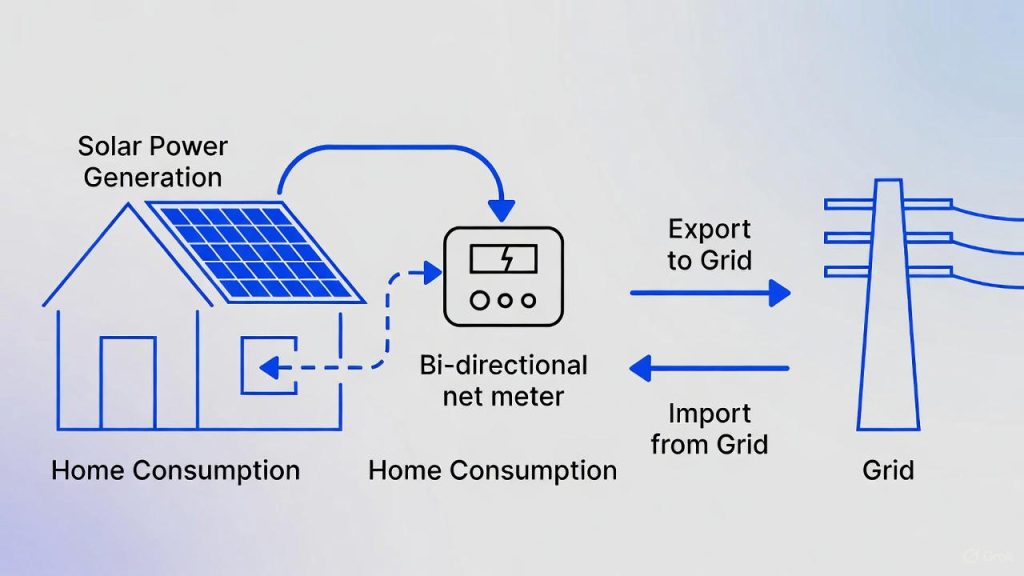
The working of net metering can be explained in four simple steps:
- Solar panels generate electricity during daylight
- Your home consumes solar power first
- Excess electricity is exported to the grid
- Net meter records import and export units
At the end of the billing cycle:
- Exported units are adjusted against imported units
- You pay only for the net electricity consumed
Benefits of Solar Net Metering in Karnataka
Solar net metering offers multiple advantages:
- Significant reduction in electricity bills
- No wastage of excess solar power
- Faster return on investment
- Mandatory requirement for subsidy
- Transparent and accurate billing
- Long-term financial savings
To understand subsidy benefits along with net metering, read:
👉 Karnataka Solar Subsidy 2026 – Full Guide for Homeowners
Solar Net Metering Approval Process in Karnataka

Step 1: Rooftop Solar Installation
Solar installation must be done through an approved vendor as per DISCOM guidelines.
Step 2: Apply for Net Meter
After installation, the vendor submits a request for net meter installation.
Step 3: DISCOM Inspection
DISCOM officials inspect:
- Solar panel installation
- Wiring and safety measures
- Inverter configuration
Step 4: Net Meter Installation
A bi-directional net meter is installed to track import and export of electricity.
Step 5: Commissioning
After successful inspection, the system is commissioned and allowed to export electricity.
For DISCOM-specific steps, refer to:
👉 BESCOM Rooftop Solar Application Process
Solar Net Metering Billing Explained
Example
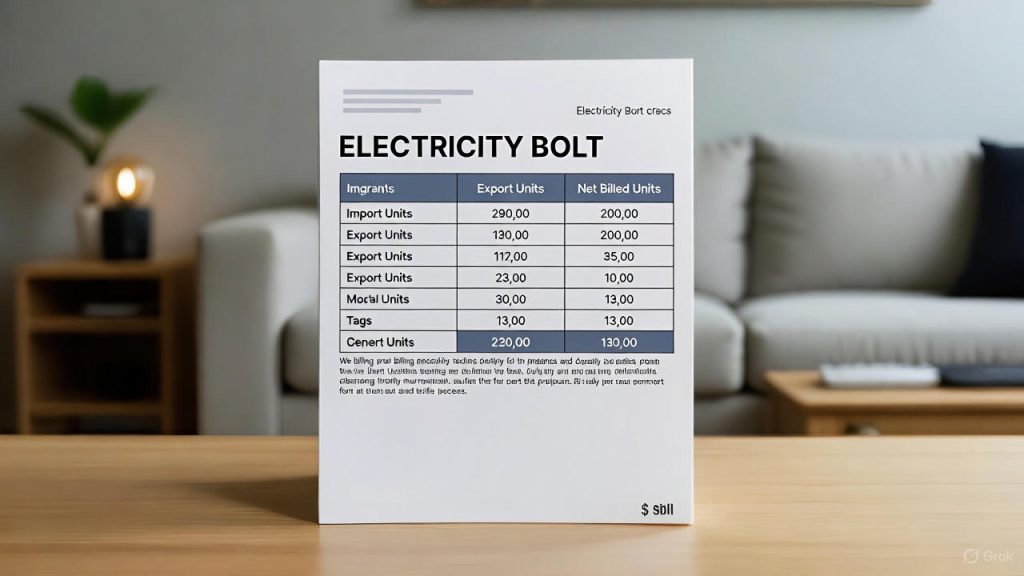
- Units consumed from grid: 300 units
- Units exported to grid: 200 units
- Net units billed: 100 units
If export exceeds import:
- Excess units may be carried forward as per DISCOM policy
Common Net Metering Problems in Karnataka
Some homeowners may face issues such as:
- Delay in net meter installation
- Incorrect meter readings
- Billing adjustment delays
- Transformer capacity limitations
Most issues can be avoided by:
- Choosing experienced vendors
- Completing documentation correctly
- Following DISCOM procedures
For assistance:
👉 Request Free Solar Quote in Karnataka
Documents Required for Net Metering Approval
- Electricity bill
- Solar installation certificate
- Vendor details
- Net metering application form
- Bank account details (for subsidy)
Full checklist available here:
👉 Solar Subsidy Documents Required in Karnataka
Is Net Metering Required for PM Surya Ghar Scheme?

Yes. Net metering is a mandatory requirement under the PM Surya Ghar Muft Bijli Yojana for residential subsidy eligibility.
Learn more:
👉 PM Surya Ghar Muft Bijli Yojana Karnataka – Complete Guide
Official Reference
For official guidelines and updates, visit:
👉 Karnataka Electricity Regulatory Commission (KERC)
Frequently Asked Questions (FAQ)
Is net metering compulsory for rooftop solar in Karnataka?
Yes, it is mandatory for grid-connected systems.
Can apartments use net metering?
Yes, residential housing societies can apply under group net metering policies.
Does net metering eliminate electricity bills completely?
Bills reduce significantly but may not always become zero.
Conclusion

Solar net metering is the backbone of rooftop solar success in Karnataka. By exporting excess electricity and adjusting units transparently, homeowners can maximize savings and comply with subsidy rules.
Understanding the Karnataka solar net metering process ensures smoother approvals, faster commissioning, and long-term financial benefits.