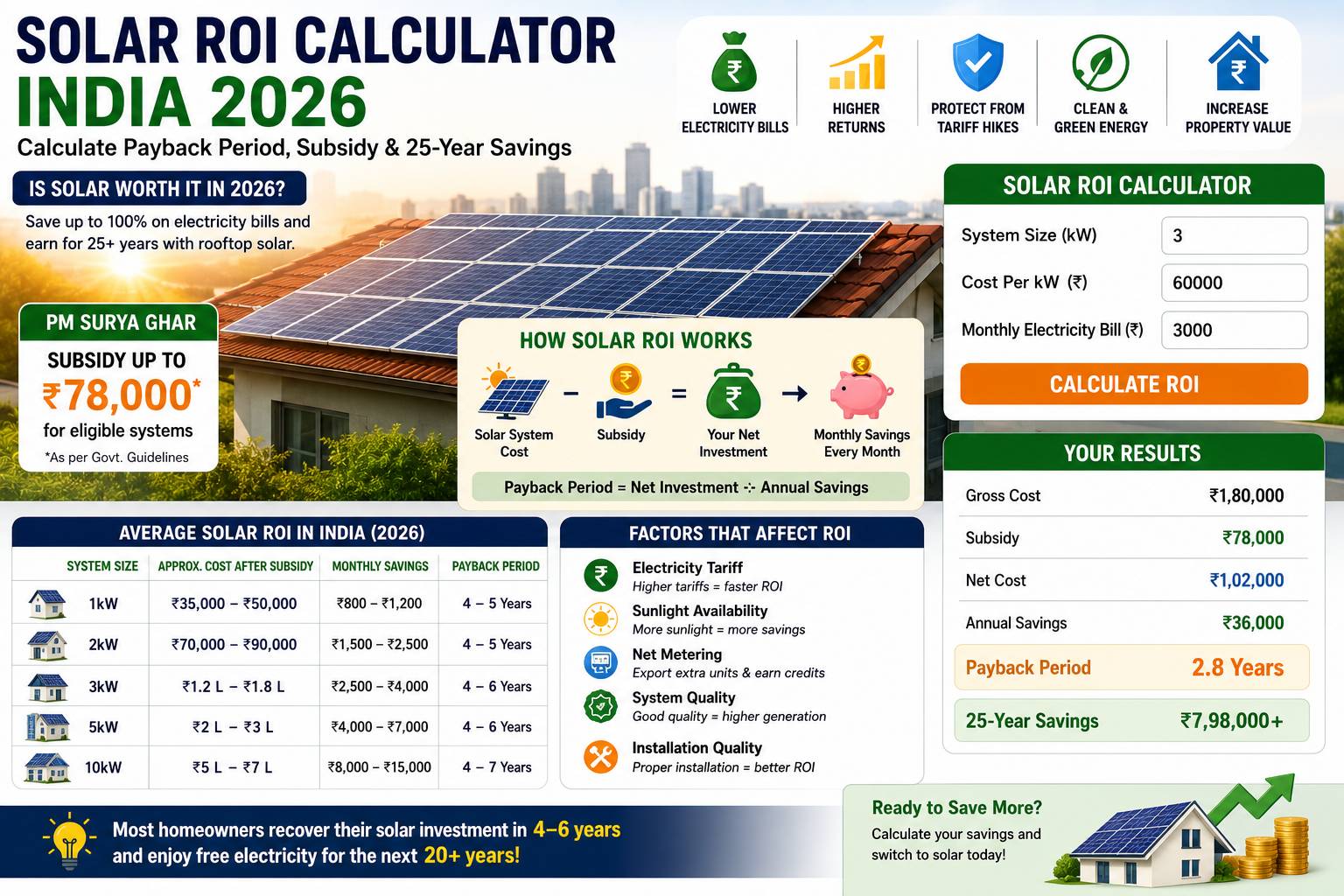
₹78,000 Subsidy + Rising Electricity Bills: Is Solar Still Worth It in 2026?
If you’re planning to install rooftop solar in India, one question matters more than anything else:
“When will I recover my investment?”
That is where a Solar ROI Calculator becomes useful.
A properly sized rooftop solar system can:
✅ Reduce electricity bills by 70%–100%
✅ Generate savings for 25+ years
✅ Increase property value
✅ Protect against future tariff hikes
✅ Deliver ROI better than many traditional investments
With the PM Surya Ghar Muft Bijli Yojana offering subsidies up to ₹78,000 for eligible residential systems, solar payback periods have become shorter than ever.
What Is Solar ROI?
ROI means:
Return on Investment
It measures how long it takes for solar savings to recover your installation cost.
Simple formula:
ROI = Solar Investment ÷ Annual Savings
Example:
- Solar System Cost = ₹2,50,000
- Subsidy = ₹78,000
- Net Cost = ₹1,72,000
- Annual Electricity Savings = ₹36,000
Payback Period:
₹1,72,000 ÷ ₹36,000 = 4.7 years
After this point:
👉 Electricity savings become profit.
Solar ROI Calculator India (2026)
Paste this calculator into your WordPress Custom HTML block:
☀ Solar ROI Calculator India 2026
Average Solar ROI in India (2026)
| System Size | Approx Cost After Subsidy | Monthly Savings | Payback |
|---|---|---|---|
| 1kW | ₹35K–₹50K | ₹800–₹1,200 | 4–5 years |
| 2kW | ₹70K–₹90K | ₹1,500–₹2,500 | 4–5 years |
| 3kW | ₹1.2L–₹1.8L | ₹2,500–₹4,000 | 4–6 years |
| 5kW | ₹2L–₹3L | ₹4,000–₹7,000 | 4–6 years |
| 10kW | ₹5L–₹7L | ₹8,000–₹15,000 | 4–7 years |
Most residential systems recover their cost within 4–6 years and continue generating savings for over two decades.
Factors That Affect Solar ROI
1. Electricity Tariff
Higher electricity rates mean faster ROI.
Commercial users often achieve faster payback than homeowners.
2. Sunlight Availability
States with strong solar radiation include:
- Karnataka
- Rajasthan
- Gujarat
- Telangana
- Andhra Pradesh
3. Net Metering
Net metering allows excess electricity to be exported to the grid, improving overall savings and shortening payback periods.
4. System Quality
Cheap panels may reduce long-term generation.
Quality installation often has a larger impact on ROI than panel brand alone. Community discussions repeatedly highlight installation quality and shading as major ROI factors.
Is Solar Worth It for a ₹3000 Electricity Bill?
Yes.
Typical scenario:
- Bill: ₹3000/month
- Suggested Solar: 3kW
- Subsidy: ₹78,000
- Payback: 4–5 years
- Savings over 25 years: ₹7–10 lakh+
This is why rooftop solar adoption continues to grow rapidly across India.
Is Solar Worth It for a ₹5000 Electricity Bill?
Even more attractive.
Typical scenario:
- Bill: ₹5000/month
- Suggested Solar: 5kW
- Annual Savings: ₹60,000+
- Payback: Around 4–6 years
After payback, most electricity generation is effectively free.
Common Solar ROI Mistakes
❌ Ignoring shading
❌ Oversizing the system
❌ Choosing the cheapest installer
❌ Not checking net-metering rules
❌ Ignoring inverter quality
Future Solar ROI Outlook
Electricity tariffs in India have historically increased over time.
As tariffs rise:
✅ Solar savings increase
✅ Payback periods improve
✅ Long-term returns become even stronger
This means many homeowners may earn a better effective return from solar than from some traditional low-risk investments.
Final Verdict
For most Indian households with electricity bills above ₹2,000–₹3,000 per month, rooftop solar remains one of the strongest long-term financial decisions available in 2026.
With subsidies up to ₹78,000, net metering benefits, and system lifetimes exceeding 25 years, many installations recover their cost in 4–6 years and generate lakhs of rupees in savings afterward.
Suggested Related Articles: